Z Route: Redemption
- 4.4
- Rating
- 5.00M
- Installs
- Free
- Price

 Analysis by App-foxy
Z Route: Redemption caught my attention because it presents a strategy game around a simple but tense decision: choosing the right door when every choice matters. After spending time with it, I found a game that is easy to understand at first glance but better suited to players who enjoy cautious decisions, repeated attempts, and the pressure of not knowing whether the next move will help or hurt.
It is a free game from 37GAMES GLOBAL, listed for Teen players, with a current version of 1.33.01 and support for Android devices running version 6.0 or later. The game has passed five million installs, which suggests that its compact survival-focused idea has reached a sizeable audience. Its average score sits at 3.9 from more than three hundred ratings, so I approached it with realistic expectations rather than assuming it would be a flawless experience.
My overall impression is mixed in a useful way. The central choice-driven premise gives the game an immediate hook, and it works well when I want a short burst of strategic tension. However, the experience can also feel unforgiving when I am still learning how its decisions work. The best way to enjoy Z Route: Redemption is to treat each attempt as information, not simply as a test of luck.
You May Also Like

 Blood Strike: 2.5 Anniversary
Blood Strike’s Loadouts Turn Every Drop Into a Tactical Gamble
A close look at Blood Strike’s custom loadouts: how fast access to signature weapons reshapes its battle royale rhythm, rewards preparation, and narrows the gap between fights.

 Pandora - Music & Podcasts
Pandora’s Music Is Easy to Start, but Harder to Recover
Pandora’s strength is its low-effort path from a seed to a station. Its weak spot is how much confidence it asks you to place in connection, setup, and quiet recovery.

 8 Ball Pool
 Is Built on Rivalries, Rematches, and Routine
A close look at the rivalries, rematches, shared routines, and unanswered safety questions that turn a quick pool match into a persistent mobile community.

 Samsung Music
’s Quiet Strength Is Playing What You Already Own
Its reach comes less from spectacle than from dependable access to a personal library. That simplicity is both the app’s strongest retention engine and its ceiling.

 AccuWeather: Weather Radar
AccuWeather Review: A Quick, Clear Forecast for Everyday Decisions
For everyday plans, the best forecast is the one you can understand quickly. AccuWeather makes rain timing, radar, and local conditions easy to act on, with a few trade-offs.

 Hill Climb Racing
Why Hill Climb Racing Still Turns Crashes Into One More Run
A tiny car, a bumpy hill and one more upgrade: Hill Climb Racing keeps resurfacing because its simple chaos makes every near-miss feel personal.
More From Our News Desk
View All News


Getting past the first points of friction
The first place many players may get stuck is not necessarily a difficult decision inside the game. It can be the transition from the store page to a comfortable first session. Because the title is free and carries a Teen rating, it is easy to expect a lightweight game that can be opened and understood immediately. That expectation is only partly fair. The basic idea is clear, but strategy games built around risky choices often require a few attempts before the consequences of each decision become familiar.
I found it helpful not to rush through the opening choices. When a game asks me to choose between doors or routes, my natural reaction is to pick quickly and see what happens. In this case, slowing down makes the experience more useful. I pay attention to what changed after each selection, whether the result helped my progress, and whether a previous choice gives me a clue about how to approach the next attempt. That habit turns an apparently random sequence into a learning process.
Another common sticking point is expecting the game to behave like a traditional strategy title with a large map, long-term construction, or a wide collection of units. Z Route: Redemption is better understood as a compact decision game with a survival mood. Its appeal comes from evaluating immediate options under pressure, not from managing a large empire or spending a long session arranging complex systems.
This difference matters when deciding whether it suits you. If you normally play strategy games for detailed resource chains, extensive customization, or slow planning across a large campaign, this may feel narrow. If you prefer making a meaningful choice quickly and then adapting to the result, the smaller scale becomes a strength. I would compare its rhythm more closely with a short strategic challenge than with a full-scale management game.
What to check before blaming the game
Before troubleshooting a disappointing session, I would start with the basics. The game requires Android 6.0 or later, so an older device may be the first practical barrier. Checking the operating system before installing saves time, especially if the store page behaves differently across devices. A compatible operating system also does not guarantee an identical experience on every phone, so I would keep other demanding apps closed if the game feels slow or unstable.
Installation is another sensible checkpoint. If the download pauses, fails, or opens into an incomplete session, I first check whether the device has enough free storage and whether the connection is stable. I avoid repeatedly tapping install or purchase buttons during a slow connection because that can create confusion about whether an action has registered. A clean restart of the store app and the game is usually a better first step than making several changes at once.
The game is free to install, but it includes optional purchases ranging from $0.99 to $99.99 per item. That is important to keep in mind before beginning. I would decide in advance whether I want to play without spending, set a purchase limit, and make sure the device’s payment controls match that decision. The presence of purchases does not automatically make the game unsuitable, but it changes how I would recommend it to younger players or anyone who prefers a completely fixed-cost experience.
The Teen content rating is also worth treating as a practical part of setup rather than a decorative label. Parents and players who share a device should review whether the game’s tone and decision-driven survival setting are appropriate for them. I would not hand the phone to a younger child without checking the device’s purchase protections first, particularly because the game offers several price points.
Performance problems can also come from the phone rather than the title itself. A device with little free space, many background apps, or an aging battery may struggle with games that work normally elsewhere. If the game becomes sluggish only after a long session, I would close it fully, let the phone cool down, and reopen it before deciding that the installation is faulty.
A calmer workflow for recovering a failed attempt
When an attempt goes badly, my first recommendation is not to repeat the exact same sequence immediately. Doing so can make the game feel more frustrating because the player is reacting emotionally rather than learning. I instead note the decision that seemed to cause the problem and change only one part of the next attempt. That creates a simple comparison: I can tell whether the new result came from a different choice or from a completely different approach.
This is one of the more useful ways to play a door-based strategy game. Treating every decision as a separate experiment makes failure less wasteful. I ask myself three questions: what did I know before choosing, what changed afterward, and what would I do differently if the same situation appeared again? The questions are simple, but they prevent the game from becoming a sequence of impulsive taps.
I also recommend taking short breaks after several failed attempts. The game’s tension encourages quick retries, yet tired players tend to choose based on frustration. A break can make the next session feel more strategic without changing the game itself. This is especially helpful for players who normally prefer relaxed puzzle games and are not used to survival pressure.
If progress seems to have disappeared, I would first close and reopen the game, then check whether the device has a stable connection and enough storage. I would avoid clearing app data as an early troubleshooting step because that can remove local information. Reinstalling should also be a later option, not the first response, since it may complicate recovery if progress is stored locally or if the device has not synchronized properly.
For a purchase that appears incomplete, I would wait before trying again, reopen the game, and check the relevant account or store history. Repeatedly buying the same item while the connection is uncertain is an avoidable risk. If the transaction still looks wrong, the sensible route is to use the platform’s normal purchase-support process and keep the receipt details available. That approach is safer than deleting the game or changing several account settings at once.
These recovery habits are not glamorous, but they make a real difference with a game that invites frequent retries. They also help separate a genuinely difficult decision from a temporary technical problem. If the game launches normally and responds to input, the frustration is more likely to come from the challenge itself than from a broken installation.
When the phone, connection, or expectation is the real problem
Not every poor session points to a defect in Z Route: Redemption. A weak connection can make loading feel unreliable, while an overloaded phone can create delayed responses that make a decision game feel unfair. If taps register late, I would test the device after closing other apps and restarting it. If the same issue appears across several games, the broader phone environment deserves attention before blaming this title.
Storage is another overlooked cause. A phone that is nearly full may install an app but behave poorly afterward, especially when other processes need temporary space. Removing unused files and restarting the device is a reasonable general check. I would also avoid playing while the phone is unusually hot, since heat can lead to reduced performance and battery drain.
There is also an expectation problem. The store summary, “Choose the right door. Survive the end.”, communicates the mood, but it does not promise a traditional campaign with deep strategic layers. Players who install it expecting a large tactical simulator may judge it harshly for being focused and immediate. In my experience, the game makes more sense when I want a concentrated challenge rather than a long evening of planning.
Compared with familiar strategy alternatives, its advantage is accessibility. I do not need to learn a large collection of systems before making the first meaningful decision. The trade-off is depth: players who want extensive control may find the decision space limited compared with strategy games built around maps, armies, or elaborate economies. Neither approach is automatically better; they serve different moods.
The game is also not the right choice for someone who dislikes retry-based design. A player who expects every action to lead steadily toward a comfortable victory may find the uncertainty irritating. I would recommend a different strategy game to anyone who wants transparent rules, predictable progression, or a long-term planning layer. Z Route: Redemption is more suitable for people who enjoy adapting after setbacks.
For an everyday example, imagine having ten minutes before a commute or while waiting for an appointment. This is where I can see the game fitting naturally. I can start an attempt, make a few careful choices, and stop without committing to a long multiplayer session or a complicated setup. On the other hand, if I am looking for a relaxing game during a crowded train ride, the pressure of choosing correctly may be less welcome than a slower puzzle or an offline casual title.
Who will get the most from it
I think the strongest audience is made up of players who enjoy compact strategy, uncertain outcomes, and learning through repetition. The game rewards attention more than reflexes. It is a reasonable pick for someone who wants a free title that can be sampled without buying it first, provided that optional purchases are handled carefully.
It may also suit players who are new to strategy games but do not want to begin with a complicated interface. The limited premise gives newcomers a clear starting point: consider the available choice, select a route, and learn from what follows. I would still encourage beginners to accept early failures instead of assuming they are playing incorrectly. The learning curve comes from recognizing patterns in decisions, not from mastering a long list of controls.
More experienced strategy players may appreciate it as a change of pace. I would not install it as a replacement for a deep management game, but I can see its value between longer sessions. It offers a different kind of concentration, one based on judgment under uncertainty rather than detailed planning over many turns.
Players who should skip it are those who want a fully predictable experience, dislike in-app purchase options, or need a game designed around long uninterrupted sessions. It is also a weaker match for anyone looking for competitive multiplayer strategy, since the appeal here is the individual decision process rather than a broad social battlefield.
My practical verdict after living with its limitations
My final view is that Z Route: Redemption is a focused strategy game with a clear identity, but it asks the player to meet it on its own terms. The door-and-survival premise creates immediate tension, and the free entry point makes it easy to try. Its 3.9 average from over three hundred ratings feels consistent with a game that can be engaging for the right audience while leaving other players wanting more depth or a smoother sense of control.
The developer, 37GAMES GLOBAL, has positioned the title as a compact choice-driven experience rather than a sprawling strategy platform. The current version, 1.33.01, is the version I would look for when checking that I am running the latest available build on a compatible device. Keeping the installation current is a sensible first step whenever a problem appears, alongside restarting the app and checking storage or connection quality.
I would recommend trying it if you enjoy making risky choices, replaying a scenario to improve your approach, and fitting strategy into short sessions. I would not recommend it as the first choice for deep campaign management, guaranteed progression, or a completely purchase-free environment. The optional item prices, from $0.99 to $99.99, make personal spending controls part of the decision to install.
What stayed with me is not the idea of choosing a door by itself, but the way that idea changes my attitude toward failure. If I rush, the game feels arbitrary. If I observe, adjust one decision, and give myself time between attempts, it becomes more thoughtful. That small shift is the game’s real test: not simply picking a door, but learning how to make better choices when certainty is unavailable.
For me, that makes it worth a cautious download for the right player. It is free, supports Android 6.0 and above, and has already attracted over five million installs, but popularity alone is not the reason to choose it. I would choose it for short, tense strategy sessions and skip it when I want a richer, slower alternative. Used with realistic expectations and sensible purchase safeguards, it can be an enjoyable little challenge rather than an all-purpose strategy game.
FAQs for Z Route: Redemption
01What is Z Route: Redemption about?
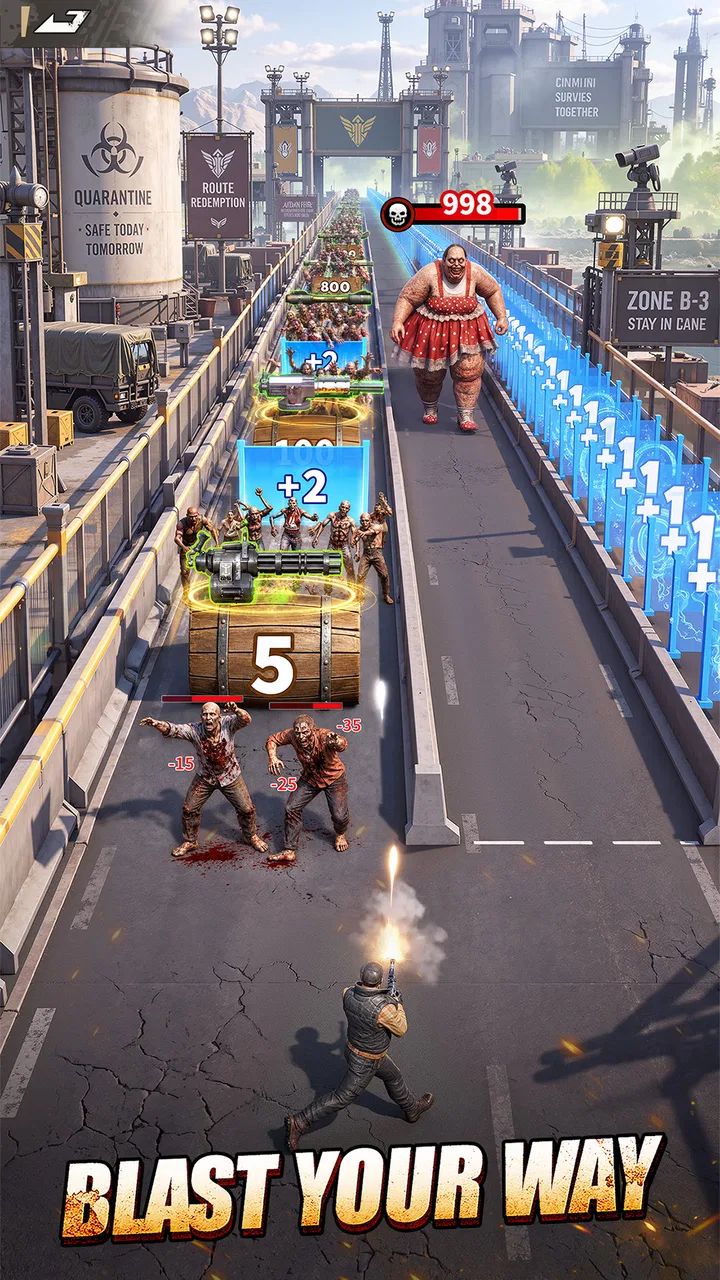
Z Route: Redemption is a zombie-themed survival and action game centered on traveling through dangerous routes while facing undead enemies and other threats. Players typically need to manage movement, combat, resources, and strategic decisions to stay alive. Its appeal comes from combining road-trip survival tension with fast-paced encounters, making every journey feel risky and unpredictable.
02Is Z Route: Redemption free to download and play?
The game may be available as a free download, but availability and pricing can vary depending on whether you use Android or iOS and which regional store account you have. Some versions may include advertisements, optional in-app purchases, or additional content. Before installing, check the official store listing for the current price, purchase details, age rating, and supported devices.
03Does Z Route: Redemption require an internet connection?
An internet connection may be needed for the initial download, updates, advertising, cloud features, or in-app purchases. Depending on the version, some gameplay could work offline after the necessary files have been installed, but players should not assume that every feature is available without internet access. Testing offline mode is recommended before relying on it during travel.
04What devices are compatible with Z Route: Redemption?
Compatibility depends on the version published for Android or iOS, as well as the operating system requirements set by the developer. Older phones and tablets may experience performance issues, longer loading times, or limited graphics options. Check the official store page before downloading, and make sure your device has sufficient free storage for the game and future updates.
05Does Z Route: Redemption contain ads or in-app purchases?
The presence of advertisements and in-app purchases can depend on the platform, region, and current release of Z Route: Redemption. Optional purchases may provide cosmetic items, resources, upgrades, or other conveniences, while advertisements could appear between gameplay sessions or when claiming bonuses. Review the store description and purchase information carefully, especially if children use the device.
Pros
- Fast-paced combat keeps missions engaging and varied.
- Multiple weapons encourage different playstyles and tactical choices.
- Dark visuals and sound design create a fitting post-apocalyptic mood.
- Short missions make it easy to play during brief sessions.
- Progression rewards regular play and gives objectives beyond combat.
Cons
- Controls may feel cramped on smaller phone screens.
- Difficulty can rise sharply in later missions.
- Repetitive enemy encounters may reduce long-term variety.
- Some upgrades require considerable grinding to unlock.
- Performance and battery use may vary between older devices.

Z Route: Redemption
Gallery